The City Workwear ProjectMen’s office shirts · Thane · Mumbai+91 83693 81345

The geometry of a well-fitted shirt.

Fit is not a size on a label. It is the relationship between a shirt’s lines and your body — where the shoulder seam lands, how the chest drapes, where the cuff stops. This study compares the four office shirt fits and maps the nine checkpoints that decide whether a shirt looks made for you.

Technical drawing of an office shirt Front view of a shirt with dimension lines marking shoulder width, chest, waist, sleeve and body length, and numbered checkpoints for collar, cuff and armhole. SHOULDER CHEST WAIST BODY LENGTH SLEEVE 123
Fig. 1 — Front elevation. 1 collar · 2 cuff · 3 armhole.

Study 02 — Silhouette overlay

Four fits, one outline.

Laid over each other, the four office shirt fits differ mainly in three places: the width at the armhole, the line from chest to waist, and the volume of the sleeve. The shoulder point and the collar barely move — which is why a correct shoulder is non-negotiable in every fit.

  • Slim fit
  • Contemporary fit
  • Regular fit
  • Classic fit
Overlay of slim, contemporary, regular and classic shirt silhouettes ARMHOLE LINEWAIST LINE
FitChestWaistSleeve
Slim
Contemporary
Regular
Classic

Relative comparison only. Actual measurements vary by maker and size.

The four office shirt fits in detail

F–01

Slim Fit

Body contour, waist shaping and a contemporary line.

A slim fit shirt follows the contour of the body. The side seams curve inward from the chest to the waist, the armholes sit higher and smaller, and the sleeves narrow toward the cuff. Many slim shirts are also slightly shorter in the body. The effect is a clean, athletic V-shape with almost no loose fabric at the belt line.

Proportion is the key. On lean and athletic builds a slim fit looks precise and modern; on broader builds it can pull across the chest and stomach, which reads as tight rather than tailored. A correctly sized slim shirt lets you cross your arms and sit down without the buttons straining.

  • Best with slim or tapered trousers
  • Look for a little stretch in the fabric for comfort
  • Check for X-shaped pull lines around buttons
F–02

Regular Fit

Comfort, movement and balanced proportions.

Regular fit runs almost straight from the armhole to the hem. It gives comfortable room through the chest and waist, a fuller sleeve, and enough length to stay tucked through a full working day. It is the most forgiving fit for different body types and for long hours at a desk, in transit or on site.

The risk with regular fit is excess: if the shoulder seam drops or the fabric balloons over the belt, the shirt looks a size too big. A well-chosen regular fit should still look neat when tucked, with any extra fabric falling to the sides rather than the front.

  • Pairs naturally with straight-leg trousers
  • Ideal for warm, humid working days
  • Keep the shoulder seam at the shoulder edge
F–03

Classic Fit

Traditional construction and relaxed proportions.

Classic fit follows traditional shirt-making proportions: a fuller chest, a straight or slightly widening body, generous armholes and roomy sleeves, often with a longer tail designed to stay firmly tucked. It prioritises ease of movement and a relaxed drape over a close silhouette.

For larger builds, or for anyone who prefers not to feel the shirt at all, classic fit is the comfortable answer. Worn under a jacket it disappears; worn alone, it benefits from a sharp tuck and a well-placed belt to define the waist.

  • Most room at chest, waist and sleeve
  • Longer tail for a secure tuck
  • Looks best tucked, under tailoring
F–04

Contemporary Fit

Modern proportions between classic and slim.

Contemporary fit takes the middle ground. It adds gentle shaping at the waist and a slightly trimmer sleeve compared with regular fit, while keeping more ease than a slim cut. The silhouette is modern and clean, but the shirt still moves easily and suits a broad range of builds.

Because it sits between two extremes, contemporary fit is the most adaptable choice for hybrid wardrobes: tucked into formal trousers on meeting days, or worn with chinos on more relaxed days without looking sloppy.

  • Light waist suppression, comfortable chest
  • Works tucked and, in shorter lengths, untucked
  • A strong default for most body types

Study 03 — Observed on the body

How a shirt actually sits.

Three studio studies show how shoulder placement, sleeve treatment and shirt length change the outline of the same basic garment. Read each one against the checkpoints below.

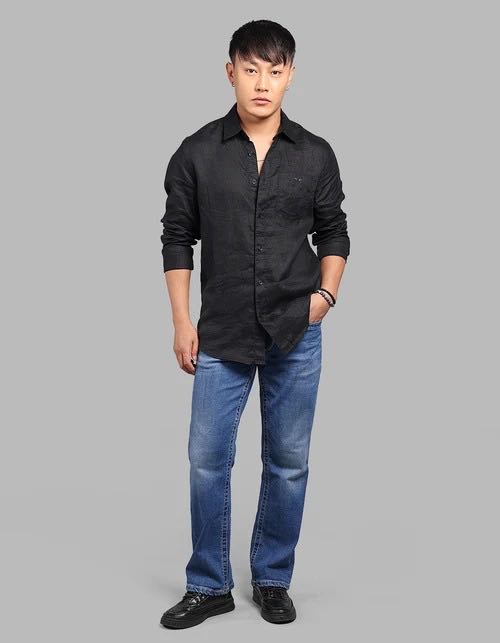
Full-length studio photograph of a man in a black shirt with sleeves pushed up, worn untucked over blue jeans
Study 03.ADark shirt, sleeves pushed to the forearm. The shoulder seam sits at the shoulder edge and the body falls straight to the hip — a close, clean outline.
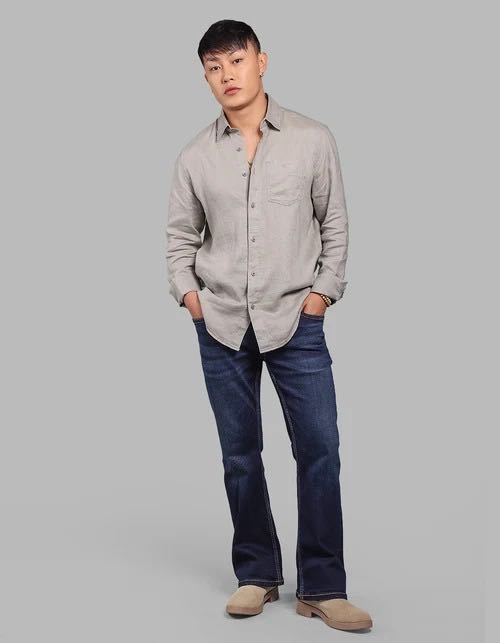
Full-length studio photograph of a man in a light grey shirt worn untucked with dark jeans and boots, hands in pockets
Study 03.BLight grey shirt worn untucked. Note how the hem length relative to the hip decides whether an untucked shirt looks intentional.
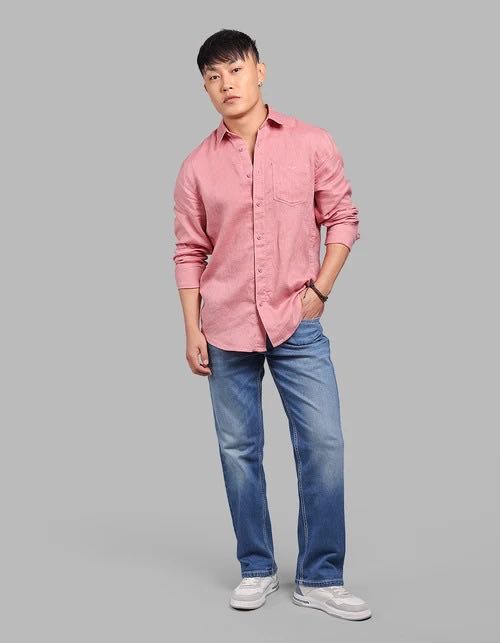
Full-length studio photograph of a man in a pink shirt with rolled sleeves worn untucked with light blue jeans
Study 03.CPink shirt with rolled sleeves. Rolling to just below the elbow keeps proportion; the chest pocket sits level when the shoulders fit.
Study 04 — Measurement atlas

Nine checkpoints of fit

Use these in a mirror, in this order. If the first two are wrong, no adjustment to the rest will fix the shirt.

  1. 01

    Shoulder seam positioning

    The seam should land exactly at the outer edge of the shoulder bone. Too far in and the shirt pulls across the back; too far out and the sleeve droops, making the whole shirt look oversized. This is the hardest point to alter, so judge it first.

  2. 02

    Collar fit

    Buttoned, you should slide one or two fingers between collar and neck. Tighter pinches when you turn your head; looser collapses under a tie and gapes without one.

  3. 03

    Chest measurement

    Buttons lie flat with no pulling or gaping between them. Reaching forward should not strain the back. Excess fabric that billows when you stand still means the chest is too large.

  4. 04

    Waist measurement

    The shirt should follow the torso without clinging. When tucked, extra fabric should be modest enough to fold neatly to the sides instead of puffing over the belt.

  5. 05

    Sleeve length

    With arms relaxed, the cuff meets the wrist bone. Reaching forward, it should not ride up far past the wrist. Under a jacket, show about a centimetre of cuff.

  6. 06
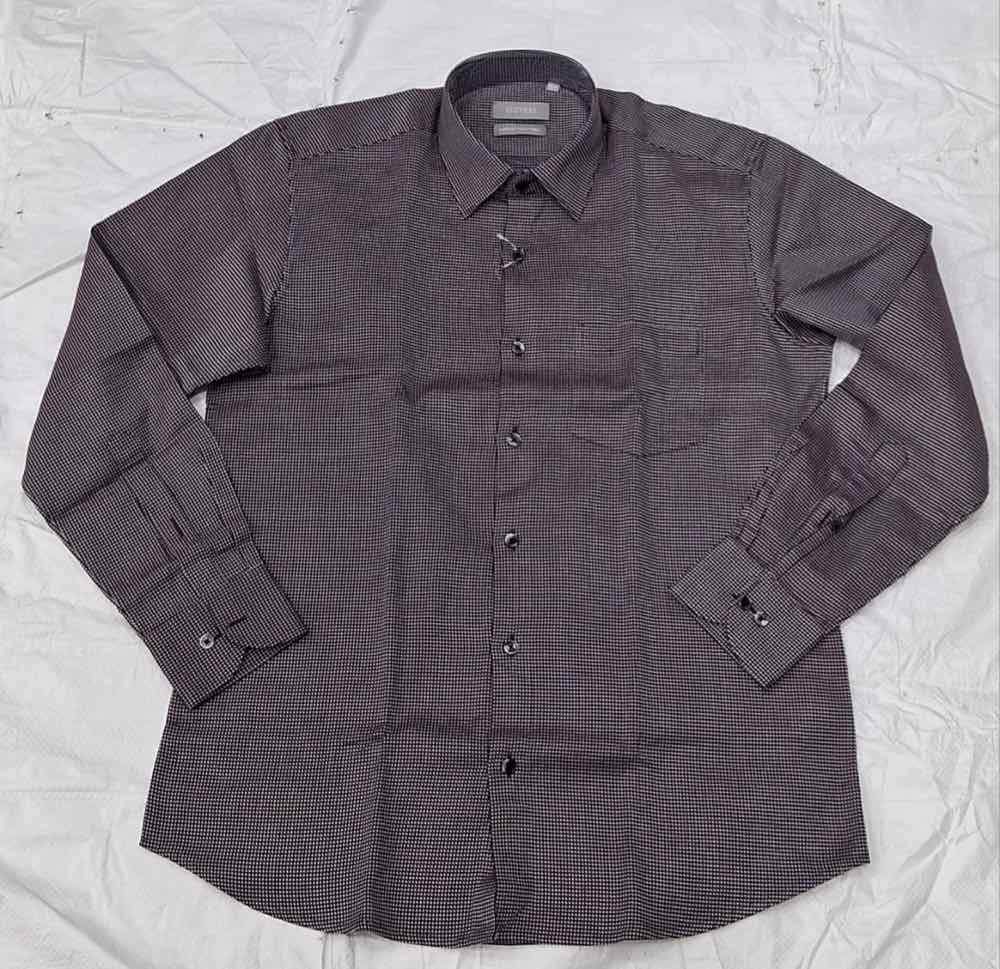
    Purple micro-patterned shirt laid flat showing collar and cuffs

    Cuff positioning

    Cuffs should close snugly enough that they do not slide over the hand, yet loosely enough for a watch to sit beneath. Adjustable two-button cuffs make this easy to fine-tune.

  7. 07
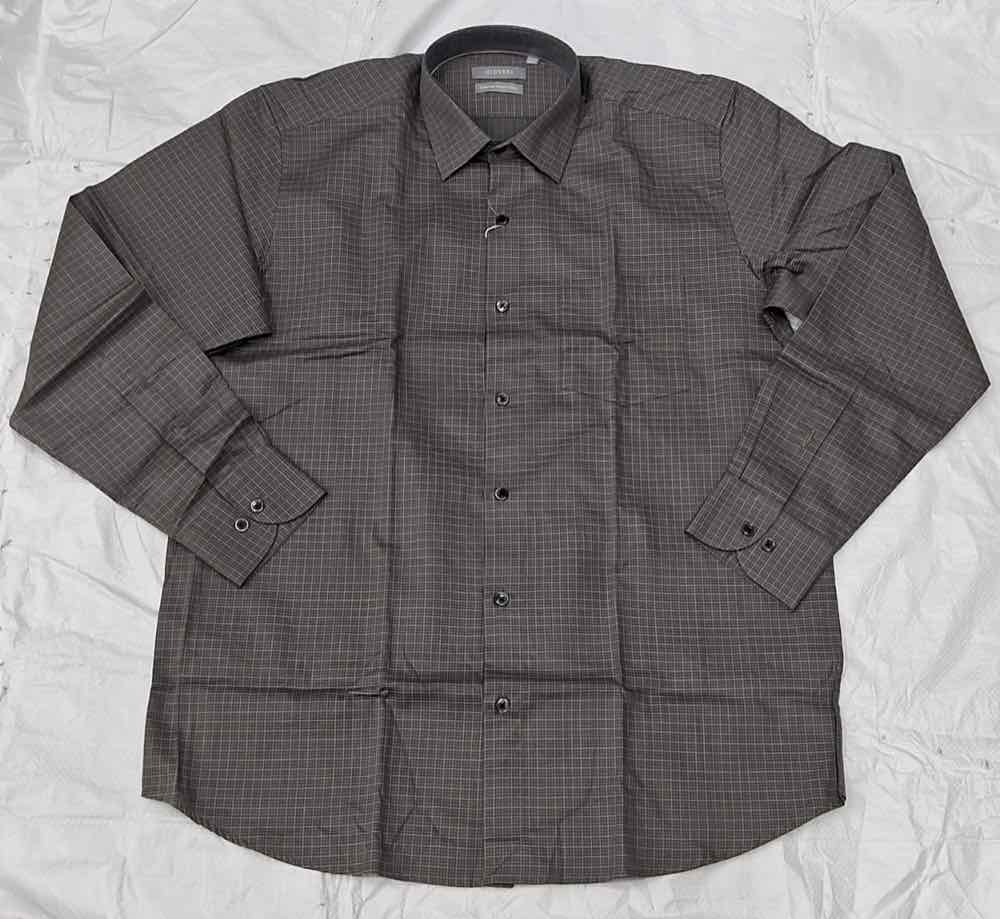
    Grey-brown micro-check shirt laid flat showing placket and chest

    Armhole construction

    Higher, smaller armholes allow more arm movement without the whole shirt lifting; low, deep armholes look loose and pull the body up when you raise your arm.

  8. 08
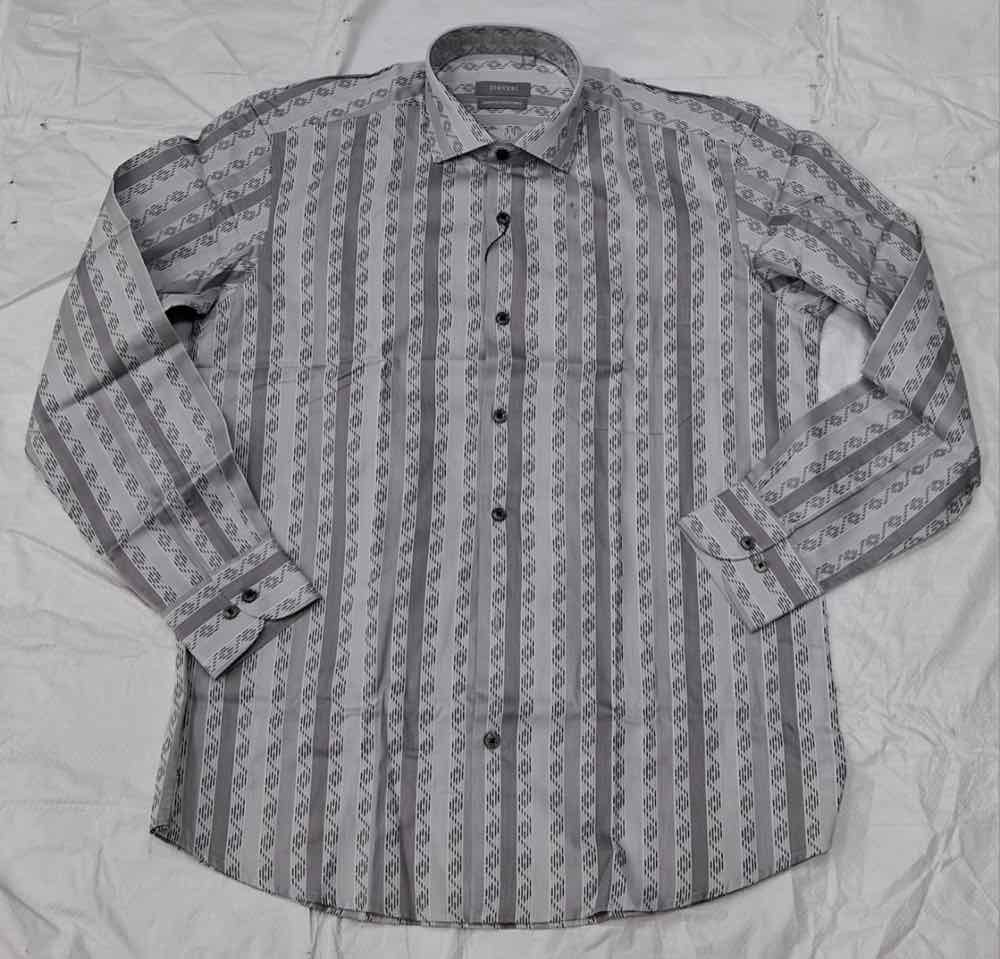
    Grey patterned shirt laid flat showing full length and hem

    Shirt length

    For tucking, the hem should sit well below the belt so it stays in when you raise your arms. Shirts meant to be worn untucked should end around the middle of the trouser fly.

  9. 09

    Tucked-in styling

    Tuck, then lift your arms once and let the shirt settle. Gather excess fabric at the sides and fold it back toward the side seams before closing the belt — often called a military tuck. A clean tuck makes even a regular fit look tailored, and is the simplest upgrade to any office outfit.

The 60-second mirror test

  1. Button fully and stand straight. Look at the shoulder seams first.
  2. Turn your head left and right. The collar should not pinch.
  3. Reach forward as if for a handshake. Back and chest should not strain; cuffs should stay near the wrist.
  4. Raise both arms. The tuck should hold.
  5. Sit down. Buttons should not gape at the stomach.
  6. Look from the side. Fabric should drape, not balloon or cling.

See shirts by fit in the collection Read: the importance of proper shirt fit