
No. 12 History · 8 min read
The Evolution of Men’s Office Fashion
The office shirt has changed more in the last few decades than in the century before. A short history of how it became the garment we wear today.
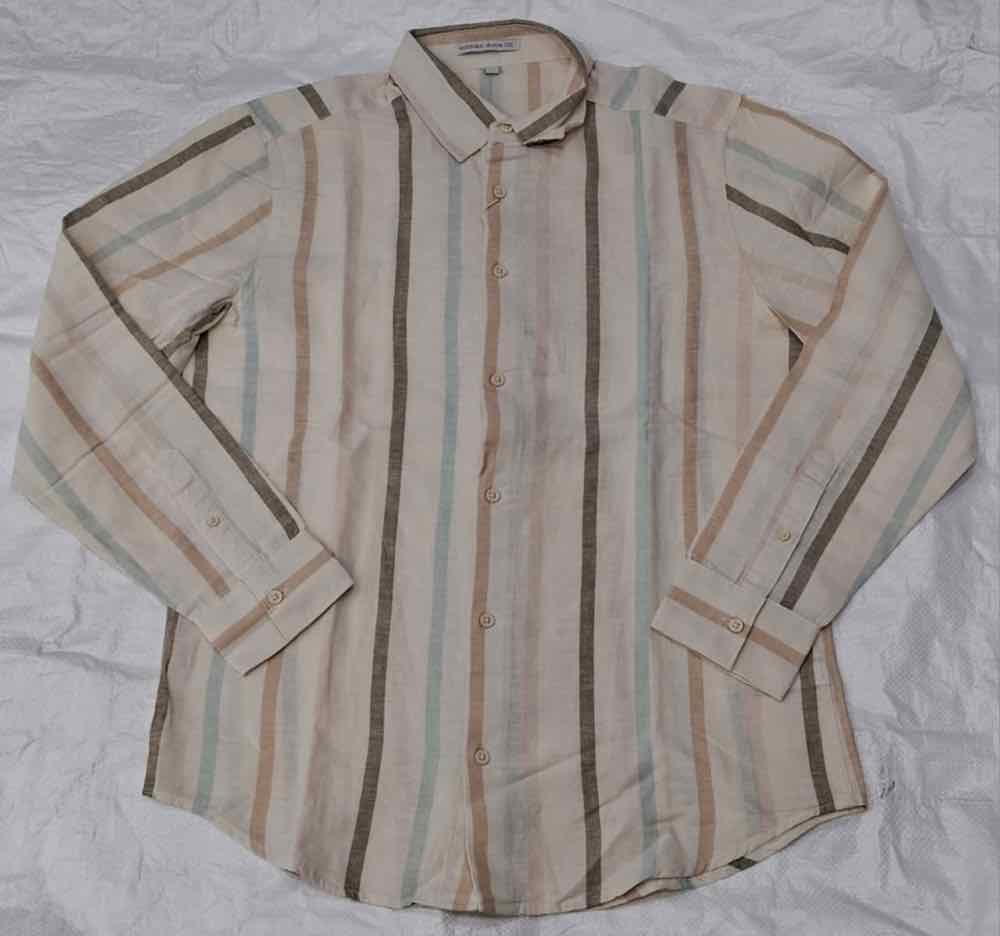
Today’s office shirt is a remarkably flexible garment: it can be formal or relaxed, white or olive, tucked under a suit or worn with chinos. It was not always so. For much of its history, the shirt was an undergarment, and the parts that showed were tightly governed by convention.
From undergarment to statement
In the nineteenth century, the shirt was largely hidden beneath waistcoats and jackets. Only the collar and cuffs were seen, and they carried the message of respectability. A clean white collar signalled that the wearer did not do manual work — the origin of the term “white-collar”.
The era of the detachable collar
Collars were frequently detachable and heavily starched, allowing them to be washed and replaced more often than the shirt itself. They were stiff, high and uncomfortable by modern standards. Over the early twentieth century, collars softened and lowered, and attached collars gradually became the norm.
Colour and pattern arrive
For decades, white dominated formal business wear. Through the mid-twentieth century, pale blue and fine stripes became increasingly accepted in offices, widening the palette while keeping the formality. The button-down collar, which originated in sportswear, also migrated into more relaxed business dressing.
Every generation has loosened the office dress code a little — and every generation has kept the shirt.
The rise of business casual
In the later decades of the twentieth century, many workplaces — particularly in technology and creative industries — adopted “business casual”. Ties and jackets became optional in many offices, and the shirt had to look good on its own. Fit, fabric and colour became more important precisely because the shirt was now the centre of the outfit.
Office dressing in India
In Indian cities, the formal shirt and trouser have long been the standard working uniform, shaped by a warm climate in which full suits are often impractical outdoors. Breathable cottons, lighter colours and the practical half sleeve shirt developed alongside air-conditioned offices where full sleeves and jackets make sense. The result is a distinctive local balance between climate and formality that still shapes office wardrobes in Mumbai and Thane.
The hybrid present
Today, many professionals divide their week between office, home and travel. Video calls frame only the collar and shoulders; commutes demand comfort; meetings still require polish. The modern office shirt answers all three with contemporary fits, easy-care fabrics, and a wider range of colours and textures than ever before.
What history teaches
- The collar has always carried the message: keep it crisp.
- White and light blue have endured for a reason; build on them.
- As dress codes relax, fit and fabric matter more, not less.
- Climate shapes local style; dress for the city you work in.
Applying it today
The best modern office wardrobe borrows from every era: the clean white collar of tradition, the colour range of the mid-century office, the comfort of business casual and the flexibility of hybrid work. Explore how that comes together in the office shirts collection.